Where Modern Europe
Was Decided
On 18 June 1815, a nine-hour battle 20 kilometres south of Brussels ended twenty-three years of European warfare and fundamentally reshapped the continent's political geography. Napoleon's defeat at Waterloo created the conditions for the balance-of-power system that governed European diplomacy for a century — and, ultimately, for Belgium itself to emerge as an independent nation in 1830.
For diplomats, military attachés, and senior officials stationed in Brussels, Waterloo carries particular resonance — the institutions they work within are, in a long causal chain, products of what happened here. FFGR Belgium provides a private, specialist-guided experience of this site calibrated to that audience.
The battlefield is not crowded or commercialised by the standards of comparable European historical sites. FFGR Belgium arranges pre-opening access to the principal museum, private guide briefings, and a vehicle that moves efficiently between the dispersed sites spread across ten square kilometres of farmland.
The Battlefield Circuit
Mémorial 1815
The principal museum complex of the Waterloo battlefield. The panoramic painting (110m circumference) depicting the battle at its peak was created in 1912 and remains one of the most impressive historical panoramas in Europe. FFGR Belgium arranges pre-opening private access before general public hours.
Le Caillou — Napoleon's Last Headquarters
The farmhouse where Napoleon spent the night before the battle and held his final staff conference. Today a museum preserving personal effects including Napoleon's camp bed, telescope, and personal campaign equipment. One of the most intimate Napoleon museum experiences in Europe.
La Belle-Alliance
The farmhouse where Wellington and Blücher met after the battle to confirm the Allied victory. The name was proposed for the final engagement — the Battle of Waterloo was ultimately named for Wellington's headquarters, not the battlefield itself. A key site for understanding the campaign's conclusion.
Hougoumont Farm
The most significant defensive position of the battle. Wellington's ability to hold Hougoumont against sustained French assault consumed 12,000 French troops in a secondary action. The restored farm and chapel contain vivid interpretation of the day-long fight for this complex.
Lion's Mound (Butte du Lion)
The 226-step artificial mound erected by the Kingdom of the Netherlands to mark the position where the Prince of Orange was wounded. From the summit, the entire battlefield is visible — the FFGR Belgium guide uses this vantage point to provide the complete tactical overview of the day's fighting.
Wellington's Headquarters
The Hôtel de la Bodenière in Waterloo village where Wellington slept the night before the battle. His dispatch after the victory — "It has been a close-run thing" — was written here. A small but historically precise museum containing Wellington's correspondence and personal effects.
Choose Your Waterloo Experience
Battlefield Half-Day
- Rolls-Royce or Maybach from your Brussels hotel
- Mémorial 1815 with specialist military historian
- Panoramic painting narrative (110m circumference)
- Lion's Mound tactical overview
- Return to Brussels by 13:30
Complete Battlefield Day
- All six battlefield sites in chronological order
- Le Caillou (Napoleon's headquarters) private access
- Hougoumont Farm guided tactical tour
- Wellington's Headquarters in Waterloo village
- Lunch at La Sucrerie restaurant (near battlefield)
- Specialist military historian throughout
Diplomatic Battlefield Programme
- Pre-opening Mémorial 1815 access (30 min before public)
- Customised geopolitical-historical narrative
- Focus on coalition warfare, diplomacy, and post-Napoleonic Europe
- Rolls-Royce Phantom or Ghost transport
- Optional: continuation to Mechelen (Brussels-Bruges corridor history)
Waterloo Private Programme
The Waterloo battlefield is approximately 20 kilometres south of Brussels city centre — about 25 to 35 minutes by private vehicle depending on traffic. Wellington's headquarters in Waterloo village is slightly closer. FFGR Belgium includes the Brussels–Waterloo transfer in all programme packages.
FFGR Belgium works with a select group of accredited guides who specialise in the Napoleonic period and the Waterloo campaign specifically. Guides hold academic qualifications in military history and have guided senior diplomatic delegations, military attaches, and heads of state at the battlefield. The guide is arranged as part of your programme booking and can be briefed in advance on your specific interests.
The Battle of Waterloo (18 June 1815) ended the Napoleonic Wars and reshaped the entire political map of Europe. The Congress of Vienna, concluded weeks before the battle, established the balance-of-power system that governed European diplomacy for a century. For Brussels-based clients in European institutions, Waterloo carries particular significance — the battlefield lies within the Belgian province that Napoleon's defeat created the conditions for Belgium itself to exist as an independent nation in 1830.
Yes. The most popular combination is a Waterloo morning (08:30–13:30) followed by an afternoon in the Grand Sablon — the chocolate circuit, antique dealers, and Comme Chez Soi or Bon-Bon dinner. The battlefield is only 20 kilometres from central Brussels, making this a natural half-day-half-day combination. FFGR Belgium also offers Waterloo combined with the Ardennes (Namur–Dinant–Waterloo circuit, full day).
Absolutely. The FFGR Belgium Waterloo programme is designed to be accessible and engaging regardless of prior knowledge of the battle. The specialist guide calibrates the narrative to the group's background. Political history, geopolitical consequences, and the personalities involved (Wellington, Napoleon, Blücher, Ney) are as compelling as the military tactics. Many of FFGR Belgium's diplomatic clients request Waterloo as part of their Brussels programme specifically for its geopolitical resonance.
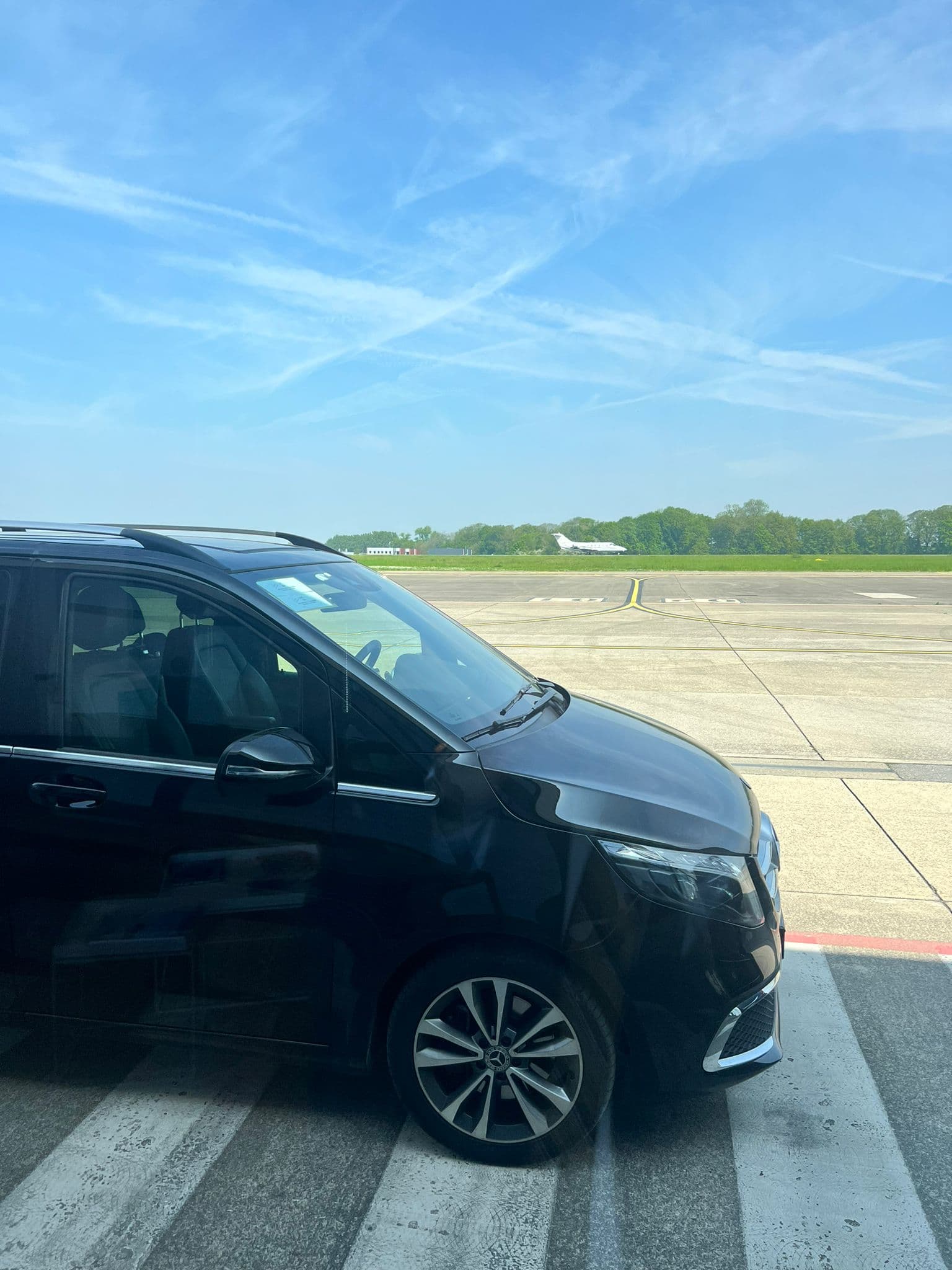
For the battlefield programme, the Rolls-Royce Ghost or Mercedes-Maybach S680 are the most popular choices — comfortable for the 20-kilometre transfer, appropriate for the site, and practical for moving between the dispersed locations across the battlefield complex. For larger groups (5–8 guests), the Mercedes-Benz Sprinter Maybach Edition is configured with individual leather seats and is ideal for group narrative delivery during transfers between sites.
Reserve Your Battlefield Programme
Half-day or full day — specialist historian, private vehicle, pre-opening access. FFGR Belgium manages every detail from Brussels hotel to battlefield and back.