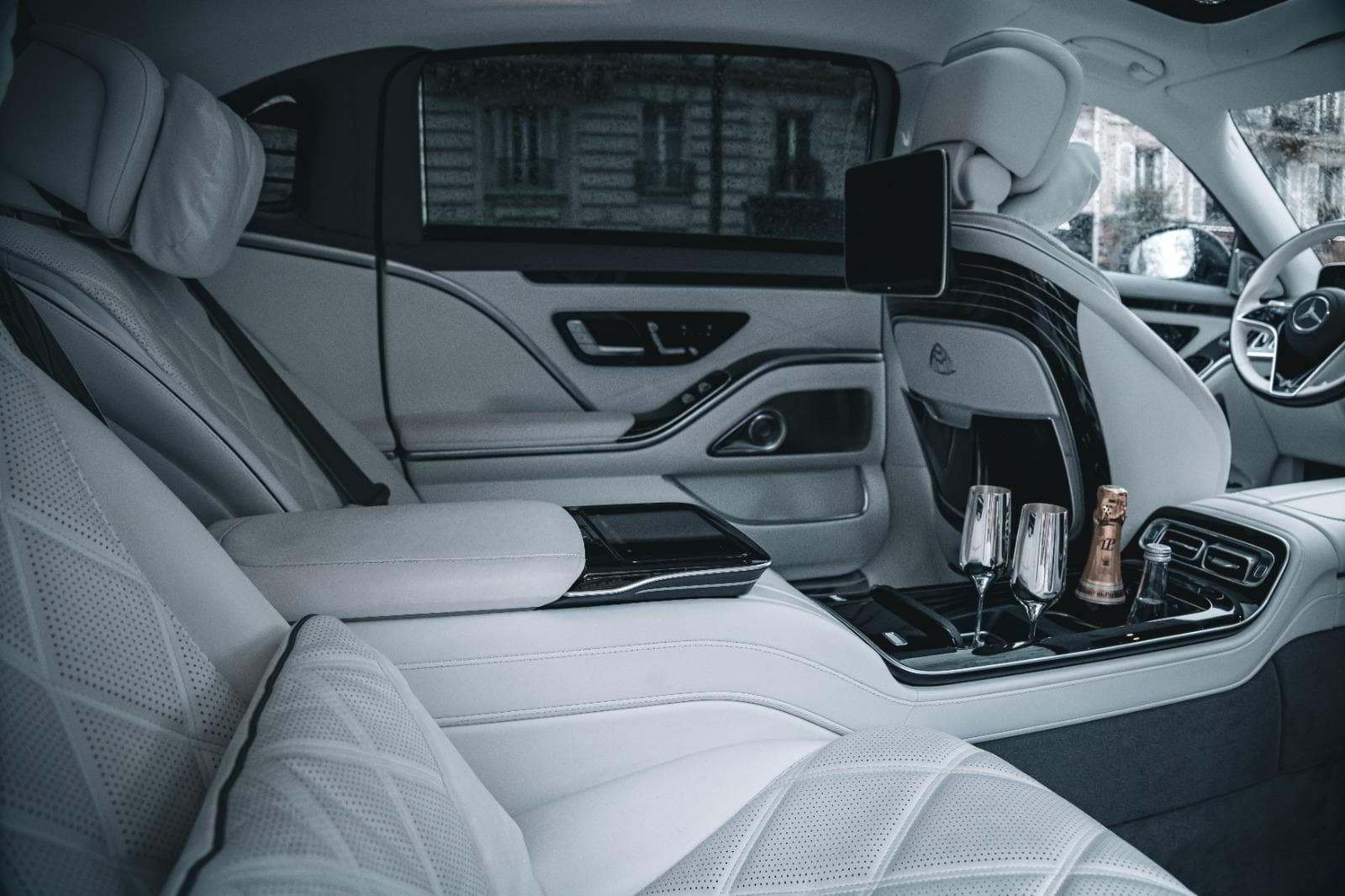
The Amsterdam-Brussels corridor is 200 kilometres: approximately 2.5 hours by private vehicle. FFGR Belgium provides premium chauffeur transfers on this route, with optional stops in Antwerp and a cross-border service tailored to diplomatic and executive requirements.
The A16/E19 motorway connecting Amsterdam to Brussels runs through the Netherlands via Breda, crosses the Belgian border at Hazeldonk, and continues south through Antwerp before reaching Brussels. The total distance is approximately 200 kilometres. Under normal traffic conditions and with a 06:00 to 09:00 or 14:00 to 16:00 departure from Amsterdam, the journey takes 2 hours 15 minutes to 2 hours 45 minutes by private vehicle.
FFGR Belgium operates this route as a scheduled transfer service, coordinating with its FFGR Holland partner network for vehicle handoff at the border if required, or operating the full route with a Belgian-registered vehicle and driver for clients who prefer a single provider throughout. The Rolls-Royce Phantom VIII is the standard vehicle for this corridor when deployed as a diplomatic or UHNW transfer; the Bentley Flying Spur or the Mercedes-Maybach S680 are the alternatives for clients who prefer a lower profile.
The Antwerp option adds approximately 25 minutes to the Amsterdam-Brussels timeline. For clients with a specific Antwerp purpose: the Diamond District, a meeting at the Port Authority, a visit to the Museum aan de Stroom: FFGR Belgium can structure the transfer as Amsterdam-Antwerp (stop, duration agreed per programme): Brussels, with the vehicle and driver holding at the Antwerp address throughout. This eliminates the need for a separate Antwerp vehicle arrangement and simplifies the logistics of a multi-city visit.
Cross-border vehicle documentation for this route is straightforward within the Schengen Area: no additional papers are required beyond standard insurance and vehicle registration. For clients carrying valuables, artwork, jewellery, diamond acquisitions from Antwerp, FFGR Belgium recommends prior consultation with a customs specialist regarding import documentation, as Belgian customs enforcement at Hazeldonk varies in intensity seasonally and depends on the nature of the goods.
The Amsterdam-Brussels route is frequently used by institutional clients whose work spans both capitals. The European Commission draws staff from Amsterdam-based organisations; the International Criminal Court in The Hague has procedural connections to EU institutions in Brussels. FFGR Belgium's driver fleet for this corridor includes individuals with familiarity with both city environments, and the dispatch team maintains real-time awareness of traffic conditions on the A16 via NavTeq data, adjusting departure recommendations accordingly.